Top 7 ERP Software for Fashion Industry in 2026
Discover the 7 best ERP solutions for fashion businesses in 2026. From Zubizi to SAP - compare features, pros, cons, and find the perfect fit for your brand.

Managing a fashion business is no walk in the park.
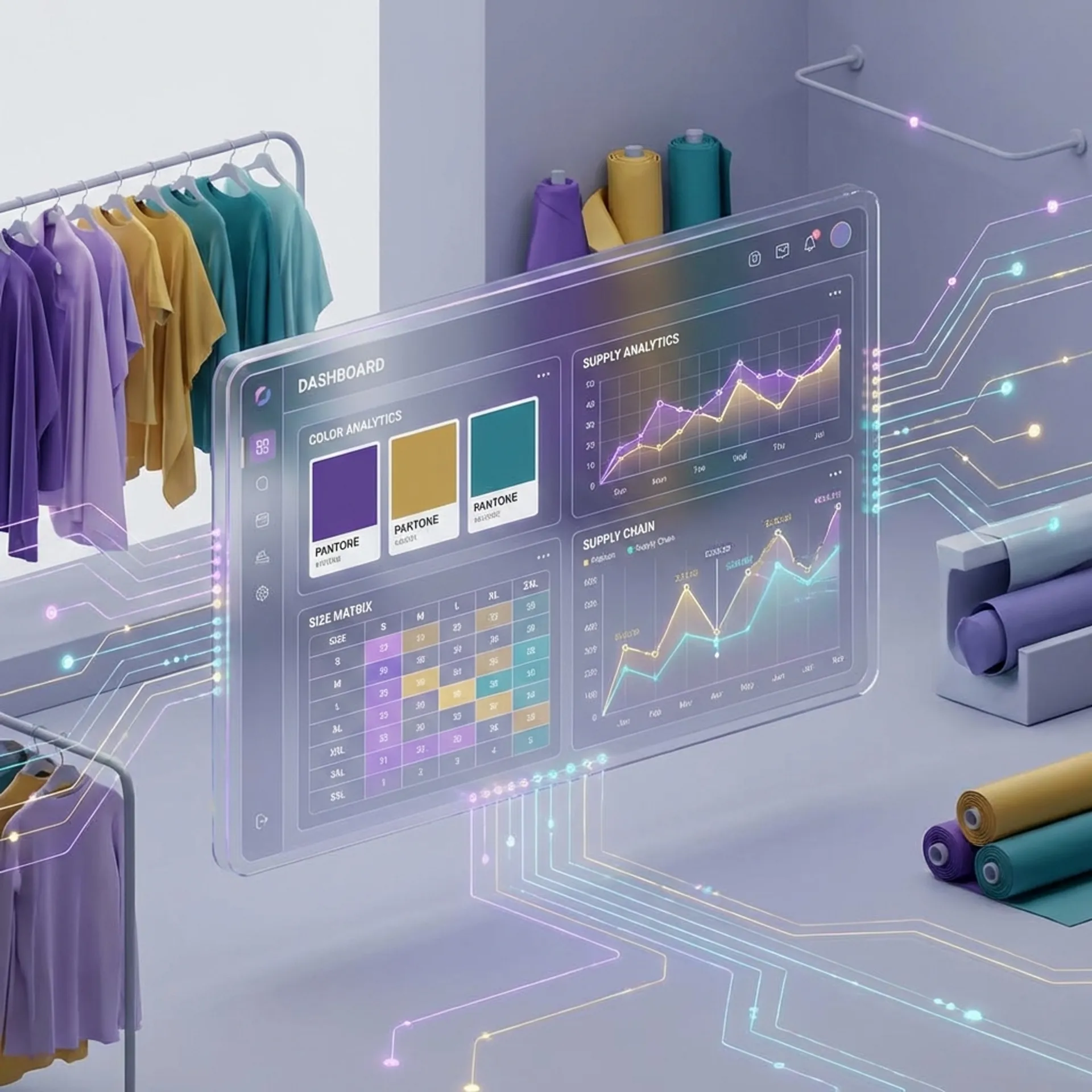
You’re juggling dozens of SKUs across sizes, colors, and styles. Add seasonal collections, complex supply chains, multiple sales channels, and GST compliance into the mix - and suddenly, spreadsheets just don’t cut it anymore.
That’s where industry-specific ERP (Enterprise Resource Planning) software comes in. Unlike generic solutions, fashion ERPs are built to handle the unique chaos of the apparel world: variant management, production tracking, omnichannel sales, and more.
But with so many options out there, how do you pick the right one?
I’ve spent considerable time researching and comparing the best ERP systems for fashion businesses. Whether you’re a boutique owner in Mumbai, a garment exporter, or a growing apparel brand - this guide will help you find your perfect match.
Let’s dive in.
What Makes a Great ERP for Fashion Businesses?
Before we jump into the list, here’s what you should look for in a fashion ERP:
- Variant Management: Handle size-color-style matrices without losing your mind
- Production Tracking: Monitor cutting, sewing, finishing - the whole manufacturing workflow
- Inventory Visibility: Real-time stock across warehouses, retail stores, and online channels
- Supply Chain Integration: Managing suppliers, purchase orders, and lead times
- Omnichannel Support: Sync inventory between your website, retail stores, and marketplaces
- GST/Tax Compliance: Especially important for Indian businesses
- Modern UI/UX: Your team should actually want to use it
Now, let’s look at the top 7 options.
1. Zubizi - Built Specifically for Indian Fashion Businesses
Best For: SMBs in India - fashion retailers, boutiques, manufacturers, and apparel brands
Zubizi isn’t just another ERP with a fashion add-on. It’s built from the ground up specifically for the Indian fashion and apparel industry.
What sets it apart? Zubizi understands the unique challenges of Indian fashion businesses - from managing ethnic wear collections and festival season rushes to GST compliance for textiles.
Key Features
- Size-Color Matrix Management: Create and manage product variants effortlessly
- Production Planning: Bill of Materials, job work tracking, WIP monitoring
- Omnichannel Inventory: Sync stock across retail, wholesale, and multiple warehouses
- GST Compliance: Automatic textile-specific GST rates, HSN codes, GSTR-1/3B reports
- Barcode Integration: Fast stock entry and accurate tracking
- 50+ Detailed Reports: Production, inventory, sales, and financial analytics
Pros
- Designed specifically for fashion - not retrofitted
- Modern, clean UI that’s genuinely easy to use
- Unbeatable Value: Enterprise features at a fraction of the cost of global competitors
- Strong GST compliance built-in
- Excellent for Indian rupee and local business context
Cons
- Primarily focused on the Indian market
- Newer compared to legacy players
UI/UX Assessment
Rating: Excellent
Zubizi features a modern, intuitive interface that doesn’t require weeks of training. The dashboard is clean, navigation is logical, and even non-technical users find it approachable. This is refreshing compared to many enterprise ERPs that feel like they’re stuck in 2005.
Industry Size
Small to medium businesses - from single-store boutiques to multi-location fashion brands with manufacturing operations.
Pricing
One time price, starting from ₹110,000, additional modules costs extra. (After that pay 30% for maintenance and support)
2. SAP Fashion Management - Enterprise-Grade Power
Best For: Large enterprises and global fashion brands
SAP S/4HANA with Fashion Management is the heavyweight champion of enterprise ERPs. If you’re a multinational fashion brand with complex global operations, SAP offers the depth and scalability you need.
Key Features
- Real-time analytics and predictive insights
- Season and collection management
- Advanced Available-to-Promise (aATP) for inventory allocation
- Multichannel planning across retail, wholesale, and e-commerce
- Integration with SAP Ariba and other enterprise tools
Pros
- Incredibly comprehensive functionality
- Handles complex global supply chains
- Strong analytics and real-time data processing
- Scalable for massive operations
Cons
- High implementation and licensing costs
- Complex to deploy - requires consultants
- Steep learning curve for users
- Not suitable for SMBs
UI/UX Assessment
Rating: Functional but Complex
SAP’s interface is powerful but not intuitive. Expect significant training time. The UI has improved with S/4HANA, but it still feels enterprise-heavy compared to modern cloud-native solutions.
Industry Size
Large enterprises with 1000+ employees and global operations.
Pricing
Their actual pricing isn’t clear without you contacting them. But it starts from somewhere around $180–$300+ per user/month plus implementation cost extra.
3. Oracle NetSuite - Strong for E-commerce and Finance
Best For: Mid-market fashion companies with omnichannel ambitions
Oracle NetSuite is a cloud-based ERP that excels in financial management and e-commerce integration. It’s popular among fashion brands focused on direct-to-consumer (DTC) sales and scaling startups.
Key Features
- Unified DTC, wholesale, and marketplace order management
- Real-time inventory by season, style, size, and location
- Demand forecasting and automated replenishment
- Multi-currency, multi-entity financial consolidation
- Strong e-commerce platform integration
Pros
- Excellent financial controls and reporting
- Great for omnichannel retail strategies
- Real-time visibility across operations
- Robust e-commerce capabilities
Cons
- Can be expensive for smaller businesses
- Complex setup and configuration
- Requires implementation partners
UI/UX Assessment
Rating: Good
NetSuite has a modern web-based interface with customizable dashboards. It’s cleaner than legacy ERPs but still has a learning curve. Role-based dashboards help different teams see what they need.
Industry Size
Mid-market companies - typically Rs. 10 crore to Rs. 500 crore in revenue.
Pricing
Pricing model isn’t transparent, you need to contact them for exact pricing. But it starts somewhere around $999+ per month per user depending on modules, and implementation cost is extra.
4. Microsoft Dynamics 365 - Ecosystem Integration
Best For: Businesses already using Microsoft tools (Office 365, Teams, Power BI)
If your company runs on Microsoft, Dynamics 365 offers seamless integration across the ecosystem. With fashion-specific extensions like Porini 365 or Volt 365, it becomes a capable apparel ERP.
Key Features
- Power BI integration for advanced analytics
- Comprehensive supply chain management
- Unified commerce across online and physical stores
- AI-powered demand forecasting
- Seamless Office 365 and Teams integration
Pros
- Deep Microsoft ecosystem integration
- Scalable from mid-market to enterprise
- Strong analytics via Power BI
- Familiar interface for Microsoft users
Cons
- Requires fashion-specific add-ons for full functionality
- Implementation can be complex
- May need specialized partners
UI/UX Assessment
Rating: Good
If you use Microsoft products, you’ll feel at home. The interface is clean and modern, with familiar navigation patterns. The learning curve is gentler for existing Microsoft users.
Industry Size
Mid-market to enterprise - companies.
Pricing
Approx. Rs. 10,000 per user/month depending on modules. Fashion add-ons cost extra.
5. Infor Fashion CloudSuite - Deep PLM Capabilities
Best For: Fashion manufacturers and brands needing strong product lifecycle management
Infor CloudSuite Fashion is purpose-built for fashion and apparel. It shines in product lifecycle management (PLM) and manufacturing workflows, making it ideal for companies that design and produce their own collections.
Key Features
- Comprehensive fashion PLM
- Global inventory and demand planning
- Style, color, size management at core
- AI-enhanced analytics
- Omnichannel and personalization support
Pros
- Industry-specific from the ground up
- Strong PLM and manufacturing capabilities
- Continuous cloud updates
- Scalable for growth
Cons
- Steep learning curve
- Documentation can be lacking
- Support response times vary
- Enterprise pricing
UI/UX Assessment
Rating: Average
Infor has modernized its interface, but navigation can still feel complex. Some forms require multiple clicks. It’s functional but not as intuitive as newer solutions.
Industry Size
Mid-market to large enterprises.
Pricing
Pricing isn’t much clear, you need to contact them to get exact pricing. But it starts somewhere around $200 per user/month, and the implementation charges are extra. Subscription varies by users and modules.
6. World Fashion Exchange (WFX)
Best For: Apparel manufacturers and garment exporters
WFX is an AI-driven, cloud-based ERP built exclusively for apparel, fashion, and textile businesses. It’s especially strong in production tracking and supply chain visibility - perfect for manufacturing-focused companies.
Key Features
- End-to-end from sampling to shipping
- Real-time production tracking and WIP monitoring
- Quality control at multiple levels
- Time and Action (T&A) management
- Virtual showroom for B2B sales
- Supplier portal for vendor collaboration
Pros
- Built specifically for apparel manufacturing
- Strong production and quality modules
- User-friendly interface
- Good value for manufacturing features
Cons
- Can be pricey for smaller businesses
- Some complexity in advanced features
UI/UX Assessment
Rating: Good
Modern cloud interface with easy navigation. WFX has focused on usability, making it accessible for factory floor managers and office staff alike.
Industry Size
SMBs to mid-market - especially manufacturers and exporters.
Pricing
Price is generally quote-based and tailored to company size and module requirements
7. ApparelMagic - All-in-One Solution
Best For: Small to mid-sized fashion brands, startups, and wholesalers
ApparelMagic combines ERP, PLM, CRM, and accounting into one platform. It’s known for being user-friendly and affordable - a good choice for growing brands that need comprehensive functionality without enterprise complexity.
Key Features
- Integrated PLM for design and development
- Multi-channel sales (B2B and B2C)
- WIP tracking and production management
- Native accounting module
- 75+ platform integrations
- Mobile app for on-the-go access
Pros
- User-friendly interface
- Affordable entry pricing
- All-in-one platform
- Strong technical support
- Multi-currency support
Cons
- Customization limitations
- Advanced features cost extra
- Base plan has restrictions on PLM
UI/UX Assessment
Rating: Very Good
ApparelMagic has one of the friendliest interfaces in the fashion ERP space. It’s cloud-based, clean, and doesn’t overwhelm users with complexity.
Industry Size
Mid-sized to large enterprises.
Pricing
Starts from $120/month to $495/month and higher if you need unlimited integrations, warehouses and stores and priority support.
Final Thoughts
The fashion industry is complex - but your ERP doesn’t have to make it harder.
The best ERP is one that fits your specific needs, budget, and growth plans. For Indian SMBs, solutions like Zubizi offer the perfect blend of fashion-specific features, modern usability, and affordability.
For larger enterprises with global ambitions, SAP, Oracle NetSuite, or Microsoft Dynamics provide the scalability and depth you need.
Whatever you choose, make sure you:
- Get a proper demo with your actual use cases
- Check implementation timelines and support quality
- Involve your team in the evaluation - they’re the ones who’ll use it daily
On a final note, compiling this list highlighted a significant reality: enterprise power doesn’t have to come with an enterprise price tag. Zubizi delivers the same robust, fashion-specific capabilities as the industry giants, but at a fraction of the cost. You get big-league performance without the scary bill, a true competitive advantage for your growing brand.
Ready to transform your fashion business? Get in touch with us to see how Zubizi can streamline your operations.