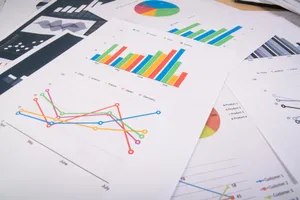
The Sneaky Way Retailers Cut Electricity Bills Using Sales Data
Learn how fashion retailers reduce electricity costs by 15-25% using sales patterns to optimize lighting and AC during slow hours. No new equipment needed.

Your Sales Data Has a Secret Cost-Saving Trick
Most fashion retailers look at their sales data to answer one question: “How much did I sell today?”
Fair enough. But that same data can help you slash your electricity bill by 15-25%. And almost no one is doing this.
Here’s the idea. Your billing software records timestamps for every transaction. Those timestamps reveal your busy and slow hours with precision. And once you know when customers aren’t in your shop, you can dim the lights, adjust the AC, and save money without anyone noticing.
I grew up in a garment manufacturing hub in Kolkata where shop owners ran ceiling fans and tube lights all day regardless of customer traffic. The electricity bills were treated as fixed costs. But they’re not fixed. They’re controllable once you understand your store’s traffic patterns.
Let me explain how this works.
Why Electricity Costs Are Fashion Retail’s Silent Profit Killer
Walk into any fashion retail store and you’ll notice two things running constantly: bright lights and air conditioning.
Both are essential. Customers need to see the colors clearly. Nobody browses comfortably in Kolkata’s summer heat or Delhi’s winter chill. These aren’t luxuries - they’re selling tools.
But here’s what I’ve noticed with retailers over the years: the lights and AC run at full blast from opening to closing, seven days a week. Even when the shop is empty.
The Real Numbers
Let’s do some rough math for a typical 1000 sq ft fashion retail store:
- Lighting: 15-20 tube lights/LEDs running 12 hours daily
- Air conditioning: 2-3 ACs running 10+ hours daily
- Other: Fans, billing computers, display lighting
Monthly electricity bill: ₹15,000 to ₹35,000 depending on location and tariff.
Now imagine reducing that by even 20%. That’s ₹3,000 to ₹7,000 saved every month. ₹36,000 to ₹84,000 annually. And all it takes is understanding when your shop is actually busy.
How Sales Data Reveals Your Traffic Patterns
Your billing software already knows your busy hours. You just haven’t asked it the right question.
Every invoice has a timestamp. Export your sales data for the last 3-6 months and look at when transactions actually happen. You’ll likely find clear patterns.
What to Look For
Hourly patterns: Which hours have the most transactions? Which hours are dead?
Daily patterns: Are weekdays slower than weekends? Is Monday significantly different from Thursday?
Seasonal patterns: How do summer, winter, and festival seasons affect hourly traffic?
A Real Example
I worked with a ladies’ wear retailer in South Kolkata who was convinced she needed staff from 10 AM to 9 PM every day. When we looked at her billing data, here’s what we found:
- 10 AM to 12 PM: 3% of daily sales
- 12 PM to 3 PM: 12% of daily sales
- 3 PM to 6 PM: 28% of daily sales
- 6 PM to 9 PM: 57% of daily sales
Over half her sales happened in the last three hours. The first two hours generated almost nothing.
This isn’t just a staffing insight. It’s an electricity insight. Why run three ACs at full cooling from 10 AM when the shop is empty until afternoon?
The Two-Zone Energy Strategy
Here’s the approach that works for most fashion retail stores. Divide your operating hours into two zones based on traffic data.
Zone 1: Display Mode (Low Traffic Hours)
These are hours when customer visits are rare. Based on your sales data, you probably know exactly when this is. For most retailers, it’s the first 2-3 hours after opening and possibly the last hour before closing.
Lighting adjustments:
- Keep 60-70% of lights on instead of 100%
- Focus lighting on entrance and main display areas
- Turn off lights in fitting rooms until needed
AC adjustments:
- Set temperature 2-3 degrees higher
- Run on eco mode or fan-only during mild weather
- If you have multiple ACs, run only one
Visual impact: Minimal. Customers entering during this time will still see a well-lit, comfortable store. You’re just not lighting empty corners for no reason.
Zone 2: Full Mode (Peak Traffic Hours)
These are your money-making hours. Everything runs at full capacity.
All lights on. ACs at comfortable temperature. Maximum visibility and comfort. Don’t compromise here - this is when sales happen.
The beauty of this approach is that you’re not reducing customer experience. You’re just matching energy usage to actual customer presence.
Practical Implementation Steps
You don’t need smart sensors or automated systems. Start simple.
Step 1: Pull Your Sales Timestamps
Export your sales register from Zubizi or whatever billing software you use. Get at least 90 days of data including date and time for each invoice.
Step 2: Create an Hourly Breakdown
Use Excel or Google Sheets to categorize each sale by hour. You’re looking for patterns like:
| Hour | % of Daily Sales | Traffic Level |
|---|---|---|
| 10-11 AM | 2% | Very Low |
| 11-12 PM | 4% | Low |
| 12-1 PM | 6% | Low |
| 1-2 PM | 8% | Medium |
| 2-3 PM | 10% | Medium |
| 3-4 PM | 12% | Medium-High |
| 4-5 PM | 14% | High |
| 5-6 PM | 16% | High |
| 6-7 PM | 15% | High |
| 7-8 PM | 10% | Medium-High |
| 8-9 PM | 3% | Low |
Step 3: Define Your Zones
Based on your data, mark which hours are Display Mode and which are Full Mode. A simple rule: any hour with less than 5% of daily sales is a candidate for Display Mode.
Step 4: Create a Simple Schedule
Write down the adjustments for each zone and post it near your main switch board:
10 AM - 1 PM (Display Mode)
- Main hall: 6 of 10 lights on
- AC: 26°C or eco mode
- Fitting rooms: Off until needed
1 PM - 8 PM (Full Mode)
- All lights on
- AC: 24°C normal mode
- Everything comfortable
8 PM - 9 PM (Display Mode)
- Same as morning
Step 5: Train Your Staff
The most important part. Your staff needs to understand why you’re doing this and how to switch between modes. Make it part of opening and mid-day routines.
What About Customer Experience?
I know what you’re thinking. “Won’t customers notice if the shop is dimmer or warmer?”
Here’s the honest truth: they won’t, if you do it right.
The adjustments I’m talking about are subtle. Going from 10 lights to 7 lights in a large store is barely perceptible. Setting AC at 26°C instead of 24°C is comfortable for anyone not coming directly from the sun.
What customers DO notice:
- A hot, sweaty store with no cooling
- A dark store where they can’t see product colors
- A freezing cold store that makes them rush out
What they DON’T notice:
- Slightly reduced lighting in empty corners
- Temperature that’s cool but not cold
- Fitting room lights that turn on when they enter
The goal isn’t to make your store uncomfortable. It’s to stop wasting energy on empty spaces.
The Seasonal Adjustment
Your patterns will shift with seasons and festivals. Here’s how to adapt.
Summer Adjustments
AC costs dominate in April-June. Your sales data will show if afternoon traffic drops due to heat. Many customers shop after 5 PM in summer.
Consider opening an hour later during peak summer if morning traffic is near zero anyway. Yes, that’s a business decision beyond electricity - but your sales data will tell you if it makes sense.
Winter Adjustments
In North India, you might not need AC at all from November to February. But lighting becomes more important due to shorter days and fog.
In South India, AC might run all year but at different intensities.
Festival Season
Durga Puja, Diwali, Eid, wedding season - these break all patterns. Customer traffic is high throughout the day.
During festival weeks, switch to Full Mode from opening to closing. Don’t try to save electricity during your most profitable period. The focus should be on maximizing sales, not minimizing costs.
Your billing data from previous years will show exactly how festival weeks differ from normal weeks.
Going Beyond Manual Switches
Once you see results from manual adjustments, you might want to automate.
Simple Timers (₹500-2000)
Basic plug-in timers for lights and ACs. Set them to switch between zones automatically.
Smart Plugs (₹1000-3000)
Wi-Fi enabled plugs you can control from your phone. Adjust in real-time if you notice unexpected traffic.
Occupancy Sensors (₹2000-5000)
Motion sensors for fitting rooms and back areas. Lights turn on only when someone enters.
These aren’t necessary to start. I’d recommend doing the manual approach for 2-3 months first to understand your patterns before investing in automation.
Tracking Your Savings
How do you know if this is actually working?
Before/After Comparison
Note your electricity bill for 3 months before implementing this strategy. Then track the next 3 months. Look for percentage reduction, not just absolute numbers, since seasonal changes affect usage.
The Real Metric
Electricity cost per transaction is more meaningful than just the total bill.
If you spent ₹20,000 on electricity and made 500 transactions this month, your cost is ₹40 per transaction.
After implementing energy optimization, if you spend ₹16,000 with the same 500 transactions, you’re now at ₹32 per transaction. That’s a 20% improvement.
Track this monthly. It accounts for business fluctuations while showing real efficiency gains.
Why This Matters for Fashion Retail Margins
Fashion retail margins are already tight. Between supplier costs, rent, staff salaries, and taxes, every rupee matters.
What I’ve learned building software for retailers is that the most profitable shops win on operational efficiency, not just on sales. They watch every cost category and look for optimization opportunities.
Electricity is one of the few costs you can control without changing your product, location, or staff. And your sales data gives you the exact information you need to do it intelligently.
Start This Week
Here’s your action plan:
- Today: Export your last 90 days of sales data with timestamps
- Tomorrow: Create an hourly sales percentage breakdown
- This weekend: Identify Display Mode hours (under 5% of daily sales)
- Monday: Start with just lighting adjustments in morning hours
- After 2 weeks: Add AC adjustments during Display Mode
- After 1 month: Compare electricity bill with previous month
You don’t need new equipment. You don’t need technical expertise. You just need to look at data you already have and make simple adjustments.
The retailers I work with who’ve done this report 15-25% reduction in electricity costs within 2-3 months. That’s money going straight to your bottom line instead of the electricity board.
Your Billing Software Should Make This Easy
If exporting timestamped sales data is difficult with your current software, that’s a problem worth solving.
Zubizi’s billing software makes sales analysis straightforward - export by date range, filter by time, see patterns clearly. Because software should help you make smarter business decisions, not just print receipts.
Want to understand your store’s traffic patterns better? Get in touch and let’s talk about how your data can help cut costs.