What is an Ostagar? The Meaning, Origin, and Role in Garment Manufacturing
Discover the meaning of 'Ostagar' in the textile industry. Learn about the origin, role in West Bengal and Bangladesh, and how Zubizi ERP software helps them manage production.

Who is an Ostagar? Meaning, Origin, and Role in the Garment Industry
If you visit the major garment manufacturing hubs in West Bengal or Bangladesh, you will frequently hear the term “Ostagar.” It is a central concept in the textile trade of this region, yet it is often misunderstood by those outside the industry.
Many people assume an Ostagar is simply a tailor. While the role is rooted in tailoring, it has evolved into something much larger. In today’s market, the Ostagar is essentially the business owner, the person who organizes, funds, and manages the entire production cycle of a garment unit.
At Zubizi Web Solutions, we work closely with garment manufacturers to digitize their operations. Through our work, we have gained a deep understanding of how Ostagars operate and the unique challenges they face. This article explains the history of the word, how the role has changed, and how modern technology is helping these entrepreneurs.
The Origin of the Word “Ostagar”
To understand the term, we have to look at the history of language in the region. The word has its roots in Persian, which heavily influenced the administrative and trade languages of Bengal during the Mughal era.
It is derived from the Persian word “Ustad” (استاد), which translates to “Master,” “Teacher,” or “Expert.”
Originally, the term was used to denote a master craftsman, someone who had achieved a high level of skill in a specific trade. Over the years, as the word blended with the local Bengali language, it evolved into “Ostagar.”
Historically, it meant the “Master Maker.” However, as the garment industry became more commercialized, the meaning shifted from being just about skill to being about ownership and management.
How the Role Has Changed Over Time
In the past, the Ostagar was often the most skilled person in the room. They would cut the fabric themselves, stitch complex parts, and teach the apprentices.
However, in the modern garment hubs of Metiabruz (Kolkata) the definition has changed. Today, an Ostagar is primarily an entrepreneur.
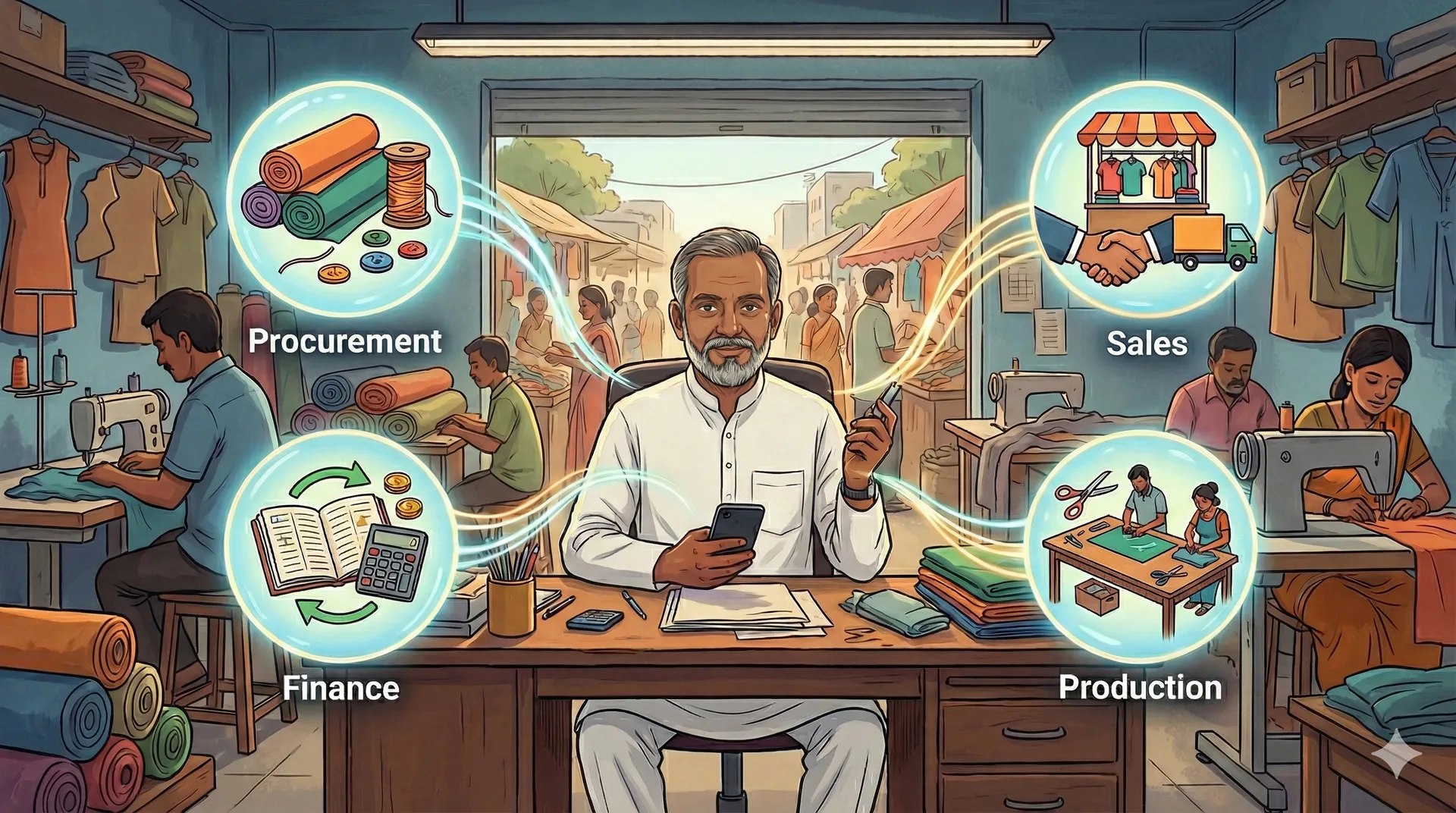
While they still possess technical knowledge of garments, their primary job is no longer to sit behind a sewing machine or a cutting table. Instead, they are the investors and managers. They hire others to do the hands-on work while they focus on procurement, sales, and finances.
The Difference Between an Ostagar, a Master Cutter, and a Karigar
In a typical unorganized or semi-organized garment unit (often called a Karkhana), there is a clear hierarchy. It is important to distinguish the Ostagar from the other roles:
1. The Ostagar (The Owner)
This is the person who owns the business. They invest the capital to buy fabric, rent the workspace, and pay the wages. They bear the financial risk. If the clothes don’t sell, the loss belongs to the Ostagar. They are responsible for the overall strategy, deciding what to make and where to sell it.
2. The Master Cutter
In many modern units, the Ostagar hires a specialist known as the Master Cutter. This person is an employee, not the owner. Their job is technical: they plan the layout of the fabric and perform the cutting. Since fabric is the most expensive cost component, a skilled Master Cutter is highly valued because they know how to minimize waste. The Ostagar supervises them but may not do the cutting personally.
3. The Karigar
These are the skilled workers who operate the sewing machines. They stitch the cut pieces of fabric into finished garments. They are usually paid on a “piece-rate” basis (paid per shirt or pant stitched) rather than a fixed monthly salary.
Where is this Term Used?
The term “Ostagar” is geographically specific. You will not hear it used in the textile hubs of Tirupur (South India), Surat (Gujarat), or Ludhiana (Punjab).
It is almost exclusively used in Bengali-speaking regions:
- West Bengal, India: Specifically in Kolkata’s massive wholesale hubs like Metiabruz and Garden Reach.
- Bangladesh: It is a common term in the domestic garment market (distinct from the massive export-oriented factories).
In these areas, if you ask for the “Proprietor” or “Owner,” people might get confused. But if you ask for the “Ostagar,” they will immediately point you to the person in charge.
What Does an Ostagar Actually Do?
The daily life of an Ostagar involves managing a complex supply chain. Since these are often small to medium-sized businesses, the Ostagar does not have a large management team. They handle most departments themselves:
- Procurement: They visit wholesale markets to buy raw materials like “Than” (fabric rolls), threads, buttons, and zippers.
- Production Planning: They decide which designs to produce based on current market trends.
- Team Management: They manage the accounts for the Master Cutter and the Karigars, keeping track of how much work each person has done.
- Sales: In hubs like Metiabruz, the Ostagar takes the finished goods to the “Haat” (wholesale market) early in the morning to sell directly to buyers from other states.
The Problem with Traditional Record Keeping
Despite managing significant amounts of money and stock, many Ostagars still rely on traditional methods for record-keeping. This is often referred to as the “Kacha Khata” system.
They use rough notebooks or loose slips of paper to track:
- How much fabric is in stock.
- How much money is owed to them by wholesalers (“Parties”).
- How many pieces each Karigar has stitched for their weekly payment.
This manual system leads to several problems. Papers get lost, calculations are often incorrect, and it is difficult to know the exact profit or loss of the business. As the business grows, it becomes nearly impossible to manage everything on paper.
How Zubizi Helps Ostagars Manage Their Business
At Zubizi Web Solutions, we recognized that Ostagars needed a better way to manage their manufacturing units. Standard accounting software is often too complicated or requires computer expertise that many traditional business owners do not have.
We developed our Garment ERP Software specifically to solve the problems faced by Ostagars.
Simplified for the Industry
Our software is designed to match the workflow of a typical Karkhana:
- Production Tracking: You can record when fabric is given to the Master Cutter and when cut pieces are given to Karigars. This ensures no material goes missing.
- Karigar Management: The software automatically calculates the wages due to each Karigar based on the number of pieces they stitched, eliminating disputes on payday.
- Digital Billing: Instead of handwriting bills at the market, Ostagars can generate professional invoices and Challans directly from their phone or computer.
- Stock Management: You can see your exact inventory levels, raw fabric and finished shirts/pants, at a glance.
By moving from “Kacha Khata” to a digital system, Ostagars can save time, reduce errors, and focus on expanding their business rather than just maintaining it.
Are you an Ostagar looking to organize your manufacturing business? Checkout our Garment Manufacturing ERP Software to learn more about how our software can help you streamline your production and accounts.