What is Inventory Management? The Complete 2026 Guide for Beginners
Inventory management is the process of tracking, storing, and controlling stock to meet customer demand. Learn key techniques, tools, and best practices in this complete guide.

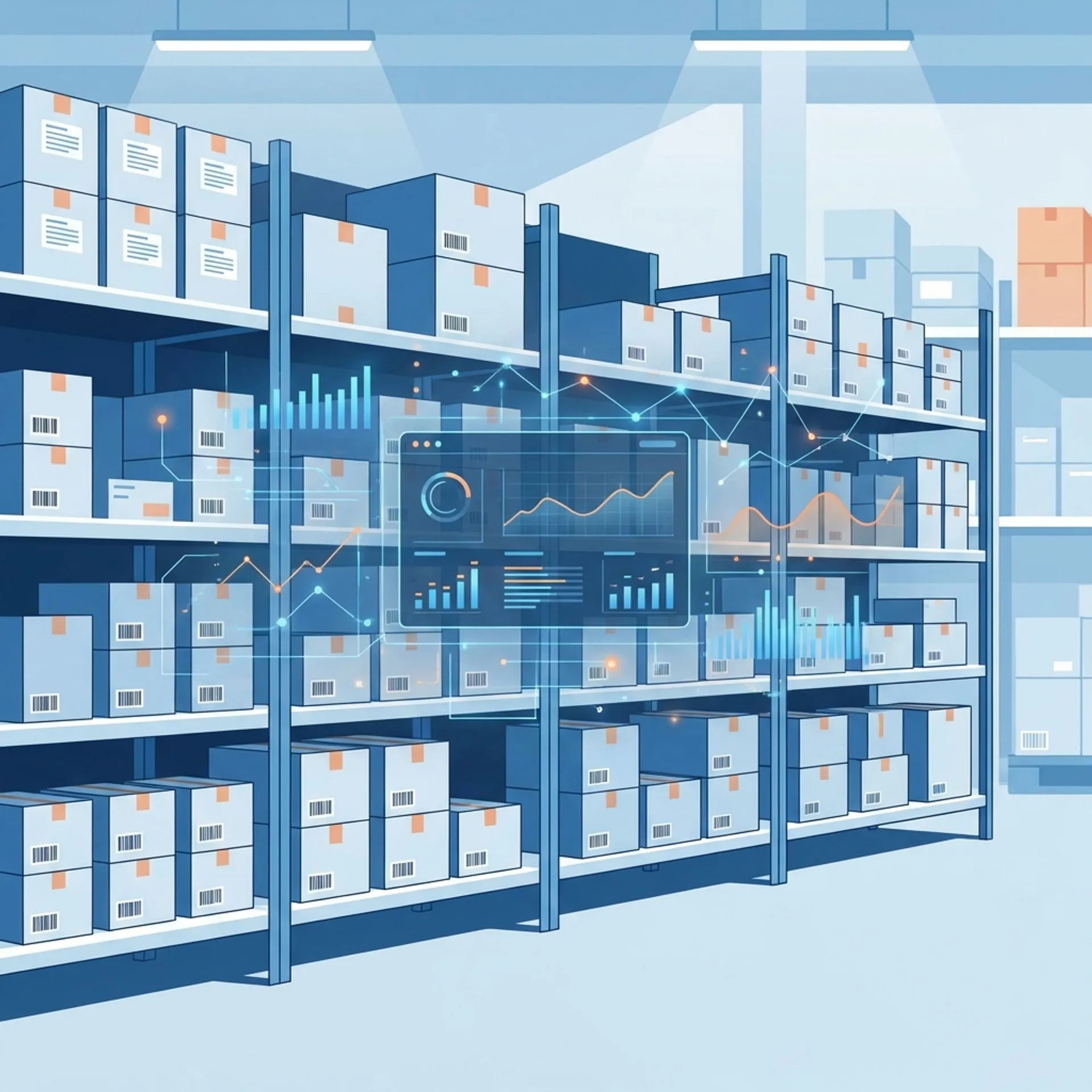
Have you ever walked into a shop, asked for a product, and the shopkeeper tells you “Sorry, it’s out of stock”? Or have you ever seen a store with dusty products sitting on shelves that nobody wants to buy?
Both situations are symptoms of the same problem: poor inventory management.
Whether you run a small kirana store, a clothing boutique, a manufacturing unit, or an e-commerce business, managing your stock properly is the difference between making money and losing it. Too much stock? Your cash is stuck. Too little stock? You lose sales.
In this complete guide, I’ll explain what inventory management really means, why it matters, who uses it, and how you can implement it in your business. Even if you’re new to this, you’ll understand everything by the end.
What is Inventory Management?
Inventory management is the process of ordering, storing, tracking, and selling goods in a business. It covers everything from the raw materials you buy to the finished products you sell.
Think of it like managing your kitchen pantry at home. You know what items you have, what’s running low, and what you need to buy during your next grocery trip. You also know which items expire soon and need to be used first.
Inventory management does the same thing for a business - but on a much larger scale.
The goal is simple: Have the right products, in the right quantity, at the right place, at the right time - all at the lowest possible cost.
When done well, inventory management prevents stockouts (running out of products), avoids overstocking (too much unsold inventory), reduces waste, and keeps your cash flow healthy.
Types of Inventory
Before diving deeper, let’s understand the different types of inventory a business might have:
Raw Materials
These are the basic items used to create products. For a garment manufacturer, this could be fabric, buttons, and thread. For a bakery, it’s flour, sugar, and eggs. Raw materials haven’t entered the production process yet.
Work-in-Progress (WIP)
These are partially finished products that are still being made. On a factory floor, you might see half-assembled products or items waiting for the next production step. WIP represents inventory in the middle of the manufacturing process.
Finished Goods
These are completed products ready for sale to customers. Once a product passes quality checks and is stored in the warehouse, it becomes finished goods inventory.
MRO (Maintenance, Repair, and Operating Supplies)
These are items used to run the business but don’t become part of the final product. Examples include tools, cleaning supplies, and office stationery.
Why is Inventory Management Important?
Good inventory management has a direct impact on your business’s health. Here’s why it matters:
Improves Cash Flow
Inventory is essentially frozen cash. Every rupee you spend on stock is a rupee you can’t use elsewhere. When you manage inventory well, you keep less money stuck in unsold products. This frees up cash for other business needs - paying salaries, marketing, or expanding.
Prevents Stockouts
Nothing frustrates customers more than hearing “Sorry, we don’t have that.” Every stockout is a lost sale. And in many cases, a lost customer. Proper inventory management helps you forecast demand and reorder before products run out.
Avoids Overstocking
Having too much inventory is just as bad as having too little. Excess stock ties up your capital, takes up warehouse space, and increases the risk of products becoming obsolete or damaged. In fashion retail, last season’s collection becomes hard to sell at full price.
Boosts Customer Satisfaction
When customers can consistently find what they need, they trust your business. Reliable fulfillment leads to repeat customers and positive word-of-mouth - the best kind of marketing.
Reduces Costs
Poor inventory management leads to hidden costs: storage fees, product spoilage, theft, insurance, and the labor needed to manage a disorganized warehouse. Efficient inventory management cuts all of these.
Enables Better Decisions
With accurate inventory data, you can make smarter business decisions. Which products are selling fast? Which ones are gathering dust? When should you order more? Data-driven insights help you answer these questions.
Who Uses Inventory Management?
Almost every business that sells physical products needs inventory management. Here’s how different industries use it:
Retailers
From large supermarkets to small boutiques, retailers need to track products from suppliers to shelves to checkout counters. They manage sizes, colors, and variants while ensuring popular items stay in stock.
Manufacturers
Manufacturing businesses track inventory at multiple stages: raw materials, work-in-progress, and finished goods. They need to ensure production never stops because of missing components.
Wholesalers
Wholesalers deal with large volumes of products in bulk. They need precise tracking to manage their warehouse space efficiently and fulfill B2B orders accurately.
E-commerce Sellers
Online sellers often manage inventory across multiple sales channels: their own website, Amazon, Flipkart, and Instagram shops. They need real-time visibility to prevent overselling the same item.
Service Industries
Even service businesses that aren’t traditional “retailers” manage inventory. A car repair shop tracks spare parts. A hospital manages medicines and supplies. A salon stocks hair products.
Indian SMEs
For Indian small and medium businesses, inventory management is especially important. From textile showrooms in Surat to electronics shops in Nehru Place, proper stock management helps businesses compete and survive.
How Does Inventory Management Work?
Let’s understand the complete process flow of inventory management - from start to finish:
Step 1: Demand Forecasting
Before ordering any inventory, businesses predict what they’ll need. This uses historical sales data, market trends, and seasonal patterns. If you sold more umbrellas last monsoon, you order more for this year.
Step 2: Purchasing and Ordering
Based on forecasts, businesses place orders with suppliers. Good inventory management considers lead times (how long suppliers take to deliver) and minimum order quantities.
Step 3: Receiving and Inspection
When goods arrive, they’re checked for quality and quantity. Any damaged or wrong items are reported. The goods are then recorded in the inventory system.
Step 4: Storage and Stocking
Products are organized in the warehouse or store. Smart businesses use methods like FIFO (putting older stock in front so it sells first) to prevent spoilage.
Step 5: Inventory Tracking
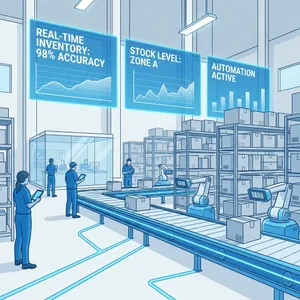
As products move - sold, transferred between locations, returned - the inventory system updates. Real-time tracking ensures everyone knows what’s available.
Step 6: Order Fulfillment
When a customer places an order, products are picked, packed, and shipped. The inventory system deducts sold items from stock counts.
Step 7: Replenishment
When stock levels drop to a certain point (called the reorder point), new orders are placed. This cycle continues to keep the business running smoothly.
Key Inventory Management Techniques
Now let’s look at the popular techniques businesses use for efficient inventory management:
Just-in-Time (JIT)
JIT means receiving inventory only when you need it for production or sale - not before. The idea is to minimize storage costs by keeping almost no excess stock.
How it works: You order just enough to meet immediate demand. When that sells, you order more.
Best for: Businesses with predictable demand and reliable suppliers.
Example: Toyota developed JIT in the 1970s for car manufacturing. They receive parts exactly when needed on the assembly line, reducing warehouse costs.
Important note: JIT requires strong supplier relationships and accurate demand forecasting. If a supplier delays, you could run out of stock.
Economic Order Quantity (EOQ)
EOQ is a mathematical formula that calculates the optimal order quantity - the amount that minimizes your total inventory costs.
How it works: EOQ balances two costs:
- Ordering costs: Shipping, handling, and processing each order
- Holding costs: Storage, insurance, and money tied up in inventory
Ordering in large quantities means fewer orders (lower ordering costs) but more storage (higher holding costs). EOQ finds the sweet spot.
Best for: Businesses with relatively stable demand for products.
Limitation: The formula assumes constant demand, which isn’t always realistic.
ABC Analysis
ABC analysis categorizes inventory items into three groups based on their value and importance:
-
A-items: High-value products that contribute most to your revenue. They might be only 10-20% of your total items but represent 70-80% of your inventory value. These need tight control and frequent monitoring.
-
B-items: Moderate value and importance. They deserve regular attention but less than A-items.
-
C-items: Low-value items that make up a large portion of your item count but small portion of value. They need simpler controls.
How it works: Classify your products into A, B, and C categories. Focus most of your management effort on A-items.
Example: In a smartphone shop, the latest iPhones (high value, low volume) are A-items. Phone cases (low value, high volume) are C-items.
First-In, First-Out (FIFO)
FIFO is a simple rule: the oldest stock should be sold first.
How it works: When you receive new inventory, it goes to the back. Products at the front (older ones) get sold first.
Best for: Perishable goods, products with expiry dates, or items that can become obsolete.
Examples:
- Grocery stores use FIFO to sell older milk cartons first
- Pharmacies use FIFO to dispense medicines before they expire
- Fashion retailers use FIFO to sell last season’s collection before new arrivals
FIFO reduces waste and prevents products from sitting too long on shelves.
Safety Stock
Safety stock is extra inventory kept as a buffer against unexpected situations.
How it works: You maintain a cushion of extra products beyond what you expect to need. This protects against:
- Sudden demand spikes
- Supplier delays
- Production problems
Calculating safety stock: Consider your demand variability (how much sales fluctuate) and lead time variability (how reliable your suppliers are).
Example: If your supplier usually delivers in 7 days but sometimes takes 10 days, you keep extra stock to cover those 3 additional days.
Reorder Point
The reorder point is the stock level at which you should place a new order.
Formula: Reorder Point = (Average Daily Usage × Lead Time) + Safety Stock
How it works: When your inventory drops to this level, you order more. The goal is to have new stock arrive just as your current stock runs out.
Example: If you sell 10 units per day, your supplier takes 5 days to deliver, and you keep 20 units as safety stock:
- Reorder Point = (10 × 5) + 20 = 70 units
- When you have 70 units left, you order more.
PAR Levels
PAR (Periodic Automatic Replacement) levels define the ideal quantity you should have after each restocking cycle.
How it works: After every delivery, your stock should reach the PAR level. If you currently have 30 units and your PAR level is 100, you order 70 units.
Best for: Businesses with consistent delivery schedules.
Other Techniques Worth Knowing
- LIFO (Last-In, First-Out): Newest stock sold first. Used for accounting purposes or non-perishable items.
- Cycle Counting: Regular partial inventory counts instead of annual full counts.
- Dropshipping: You don’t hold inventory - suppliers ship directly to customers.
- Vendor-Managed Inventory (VMI): Suppliers manage stock levels at your location.
Tools and Systems for Inventory Management
Managing inventory manually with registers and spreadsheets works for very small businesses. But as you grow, you need better tools.
Inventory Management Software
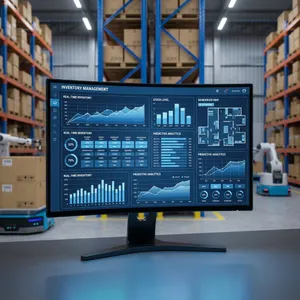
Modern inventory management software automates tracking and gives you real-time visibility into your stock.
Key features include:
- Real-time tracking: Know exactly what you have, where it is, and how much
- POS integration: Sales at the billing counter automatically update inventory
- Automated reorder alerts: Get notified when stock runs low
- Multi-location support: Track inventory across multiple warehouses and stores
- Demand forecasting: Use sales data to predict future needs
- Reports and analytics: Understand what’s selling, what’s not, and why
For Indian SMEs, Zubizi’s Inventory Management Software offers all these features with added support for GST compliance, size-color variants (essential for fashion retail), and multi-godown tracking. It’s built specifically for how Indian businesses operate.
Barcode Scanning
Barcodes are machine-readable labels printed on products.
How it works: Staff scan barcodes with handheld scanners or smartphone apps. The system instantly identifies the product and updates records.
Benefits:
- Faster stock counting
- Fewer manual errors
- Easy to implement and affordable
- Great for retail billing
Best for: Small to mid-sized businesses wanting to improve accuracy without big investments.
RFID Technology
RFID (Radio Frequency Identification) uses radio waves to track tags attached to products.
How it works: RFID readers can detect tags without line-of-sight. They can scan multiple items simultaneously - even inside boxes.
Benefits:
- Scan many items at once (much faster than barcodes)
- No need to aim - just wave the reader nearby
- Real-time location tracking in warehouses
- Reduces labor costs in high-volume operations
Considerations: Higher upfront costs than barcodes, more complex setup. Better suited for high-volume operations like large warehouses or distribution centers.
Cloud-Based Systems
Cloud-based inventory solutions let you access your data from anywhere - your computer, phone, or tablet.
Benefits:
- No need for expensive servers
- Updates automatically
- Access from any location
- Easy backups and data security
Common Inventory Management Challenges
Even with good systems, businesses face challenges with inventory management:
Lack of Real-Time Visibility
When data isn’t updated instantly, you make decisions based on old information. This leads to stockouts or overstocking.
Inaccurate Demand Forecasting
Predicting the future is hard. Market trends change, new competitors appear, and unexpected events (like a pandemic) throw off all predictions.
Manual Processes and Errors
Writing stock counts on paper or in Excel sheets leads to mistakes. One typo can cause major problems.
Overstocking and Understocking
Finding the balance between too much and too little is an ongoing challenge. Both extremes hurt your business.
Multi-Location Complexity
Managing stock across multiple warehouses, stores, and sales channels becomes increasingly difficult as you grow.
Obsolete and Perishable Inventory
Products can expire, go out of fashion, or become outdated. Managing the lifecycle of products requires constant attention.
Supplier Reliability
If suppliers deliver late or send wrong items, your entire inventory plan falls apart.
Inventory Shrinkage
Stock disappears due to theft, damage, or errors. Without good systems, you might not even notice until it’s too late.
Frequently Asked Questions
What is inventory management in simple terms?
Inventory management means keeping track of everything you buy and sell. It’s about knowing what products you have, where they are, how many you need to order, and when to order them. The goal is to always have enough stock to meet customer demand without wasting money on excess inventory.
What are the 4 types of inventory?
The four main types are:
- Raw materials - Basic items used to make products
- Work-in-progress - Partially finished goods
- Finished goods - Completed products ready for sale
- MRO supplies - Items used to run the business (like tools and cleaning materials)
What is the difference between inventory control and inventory management?
These terms are often used interchangeably, but there’s a subtle difference:
- Inventory control focuses on managing products already in your warehouse - counting, storing, and moving them.
- Inventory management is broader - it includes planning, purchasing, demand forecasting, and strategy.
Think of inventory control as a part of the larger inventory management process.
What are the 3 major inventory management techniques?
The three most widely used techniques are:
- Just-in-Time (JIT) - Order inventory only when needed
- ABC Analysis - Categorize items by value and importance
- EOQ (Economic Order Quantity) - Calculate optimal order sizes
Many businesses combine multiple techniques based on their specific needs.
How can small businesses implement inventory management?
Start simple and grow from there:
- List all your products - Know what you’re selling
- Set up basic tracking - Even a spreadsheet is better than nothing
- Identify fast and slow movers - Focus on what matters
- Set reorder points - Know when to order more
- Consider software - As you grow, invest in proper inventory management software
The key is to start somewhere. You can always improve as you learn.
Conclusion
Inventory management isn’t just for big corporations. Every business that sells physical products - from a small shop to a large manufacturing unit - needs to manage its inventory well.
The basics are simple:
- Know what you have
- Track what comes in and goes out
- Order the right amount at the right time
- Use data to make better decisions
Start with the fundamentals and build from there. Use techniques like ABC analysis to prioritize your efforts. Set up reorder points so you never run out of bestsellers. Consider software tools to automate the tedious parts.
Remember: poor inventory management is like a slow leak in your business. You might not notice it every day, but over time, it drains your profits.
Take control of your inventory today. Your cash flow will thank you.
Ready to get started? Contact us to learn how Zubizi can help you manage your inventory more efficiently. We’d love to show you what’s possible.