What is Inventory Automation? A Complete 2026 Guide for Indian Businesses
Inventory automation is essential for businesses in 2026. Learn what it is, how it works, key benefits, and how to implement it in your business.

You just lost a customer. Not because your product was bad or your price was too high. But because your staff spent 10 minutes searching for an item that your register showed was “in stock” - except it wasn’t.
This happens more often than business owners like to admit. In 2026, manual inventory tracking - whether through paper registers or basic spreadsheets - simply cannot keep up with the pace of modern retail. Every miscount, every delayed update, and every forgotten entry costs you money.
The solution? Inventory automation.
In this guide, I’ll explain what inventory automation actually means, how it works behind the scenes, the real benefits it delivers, and how you can implement it in your business. Whether you run a small boutique or manage multiple godowns, this is for you.
What is Inventory Automation?
Inventory automation is the process of using software and technology to track, manage, and optimize your stock levels automatically - without constant manual intervention.
Instead of physically counting items, updating registers, and manually calculating reorder quantities, an automated system does all of this for you. Every time a product is sold, received, or transferred, the system updates instantly.
Think of it like this: manual inventory management is like driving with a paper map. Inventory automation is like having GPS navigation that updates in real-time, warns you about problems ahead, and suggests the best route automatically.
The core technologies that power inventory automation include:
- Barcode scanning: Products are identified instantly with a simple scan
- Inventory management software: The central brain that tracks everything
- Real-time syncing: Updates happen across all locations immediately
- Automated alerts: The system notifies you when action is needed
- Integration with billing: Sales directly update stock counts
For Indian businesses dealing with GST compliance, multiple godowns, and size-color variants, inventory automation isn’t just convenient in 2026 - it’s becoming essential for survival in a competitive market.
How Does Inventory Automation Work?
Let me walk you through what happens behind the scenes when you automate your inventory:
Step 1: Product Database Setup
First, every product gets entered into the system with complete details - SKU, name, variants (size, color), purchase price, selling price, and GST rates. Each product receives a unique identifier, usually linked to a barcode.
Step 2: Real-Time Tracking Integration
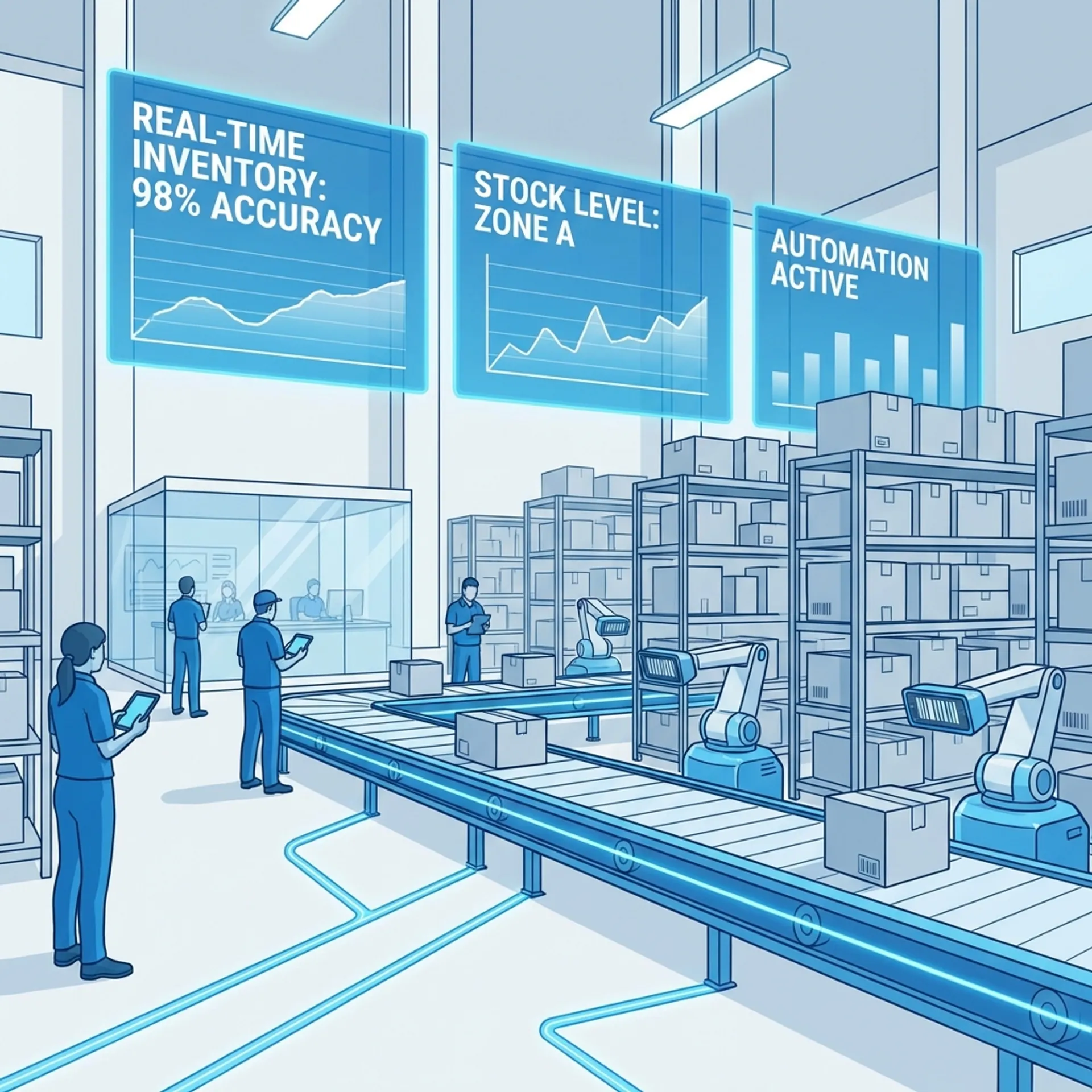
The inventory automation system connects to your billing counter, e-commerce platform, and other sales channels. When a sale happens anywhere, the stock count updates automatically across all connected systems. No manual entry. No delays.
Step 3: Automated Reorder Triggers
You set minimum stock levels for each product. When inventory drops to that threshold, the system sends you an alert - or in advanced setups, automatically generates a purchase order for your supplier. You never run out of bestsellers again.
Step 4: Multi-Location Sync
If you have multiple stores or godowns, inventory automation keeps everything synchronized. Stock transfers are tracked in real-time. Your branch manager and head office finally look at the same numbers.
Step 5: Reporting and Analytics
The system continuously collects data on what’s selling, what’s sitting idle, and what’s moving fast. These insights help you make smarter purchasing decisions, identify dead stock early, and optimize your working capital.
Key Benefits of Inventory Automation
Here’s what inventory automation actually delivers for your business:
Save Hours of Manual Work
Physical stock counting, register entries, and reconciliation eat up hours every week. With inventory automation, these tasks either disappear or become significantly faster.
Reduce Costly Errors
Human beings make mistakes - especially when tired or rushed. A single wrong entry can cascade into major problems. Inventory automation uses barcode scanning and digital tracking to minimize these errors. Accuracy improves dramatically.
Prevent Stockouts and Lost Sales
Nothing frustrates customers more than “sorry, out of stock.” Automated low-stock alerts ensure you reorder before products run out. You maintain customer trust and capture every possible sale.
Avoid Overstocking and Blocked Capital
Too much inventory ties up your cash in products sitting on shelves. Inventory automation helps you maintain optimal stock levels - enough to meet demand without excess. Your working capital stays healthy.
Make Data-Driven Decisions
Which products are your top performers? Which ones haven’t moved in months? What’s your inventory turnover ratio? Automated reports answer these questions instantly. You stop guessing and start knowing.
Scale Without Proportional Effort
As your business grows in 2026 - more products, more locations, more sales channels - manual tracking becomes impossible. Inventory automation scales with you. Handle ten times the volume without ten times the headaches.
Improve Customer Satisfaction
Accurate stock information means you can fulfill orders correctly and on time. This builds loyalty and generates positive word-of-mouth.
How to Implement Inventory Automation in Your Business
Ready to automate? Here’s a practical roadmap:
Step 1: Audit Your Current Process
Start by documenting how you currently manage inventory. Where are the pain points? Frequent stockouts? Reconciliation nightmares? Data scattered across locations? Understanding your problems helps you choose the right solution.
Step 2: Choose the Right Software
Not all inventory software is created equal. For Indian businesses, look for:
- GST compliance built-in
- Support for size-color-style variants (crucial for fashion retail)
- Multi-godown and multi-location capabilities
- Barcode scanning integration
- Reports that make sense for your business
Zubizi’s inventory management software is built specifically for Indian SMEs, with all these features included from day one.
Step 3: Set Up Your Product Database
Import your existing product catalog or enter items manually. Assign SKUs, set up variants, and configure pricing.
Step 4: Configure Reorder Points
For each product, determine the minimum stock level that should trigger a reorder. Consider your average sales velocity and supplier lead times. The system will handle alerts automatically.
Step 5: Train Your Team
Inventory automation only works if your staff uses it properly. Train everyone on barcode scanning, stock receiving procedures, and transfer documentation. Make sure they understand why accuracy matters.
Step 6: Go Live and Monitor
Start using the system for all transactions. Monitor and adjust reorder points based on actual performance.
Who Should Use Inventory Automation?
Inventory automation isn’t just for large corporations. Here’s who benefits most:
Retailers with Product Variants
Fashion stores, footwear shops, and boutiques deal with multiple sizes, colors, and styles. Manual tracking of these variants is a nightmare. Automation handles complexity effortlessly.
Multi-Location Businesses
If you have a main store, a godown, and branch outlets, keeping stock synchronized manually is practically impossible. Inventory automation gives everyone real-time visibility.
Wholesalers and Distributors
High-volume operations need precise tracking. When you’re dealing with hundreds or thousands of transactions daily, automation isn’t optional - it’s survival.
E-commerce Sellers
Selling on your website, Amazon, Flipkart, and Instagram simultaneously? Without inventory automation, you risk overselling the same item across channels.
Growing Businesses
If you’re expanding - adding products, opening new locations, entering new channels - now is the time to automate. It’s much harder to implement systems after chaos has set in.
Any Business Tired of Inventory Problems
If you’re constantly dealing with stockouts, overstocking, reconciliation headaches, or cash stuck in dead stock - inventory automation is your solution.
How Zubizi Helps with Inventory Automation
At Zubizi, we’ve built our inventory management software specifically for how Indian businesses operate.
Real-time tracking across all your locations - shop floor, warehouse, multiple godowns. Automated reorder alerts so you never run out of bestsellers. Barcode integration for speed and accuracy at the billing counter.
For fashion and apparel businesses, we handle size-color-style variants the way you actually need them. GST compliance is built in - CGST, SGST, IGST calculated automatically, with GSTR-1 data ready for filing.
We’ve been serving Indian retailers for nearly a decade. This isn’t generic software localized for India - it’s purpose-built for your challenges.
Conclusion
Inventory automation transforms how you manage stock - from reactive firefighting to proactive control. You stop losing sales to stockouts. You stop blocking capital in excess inventory. You stop wasting hours on manual counting and reconciliation.
The technology is accessible and affordable for businesses of all sizes in 2026. The question isn’t whether you can afford to automate - it’s whether you can afford not to.
Start simple. Choose the right software. Train your team. The payoff comes quickly.
Ready to automate your inventory? Contact us for a demo of Zubizi’s inventory management software. We’ll show you exactly how it works for your type of business.