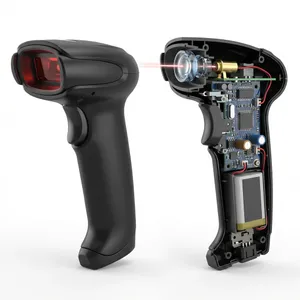
How We Built a Godown Transfer System That Stopped Product Theft and Missing Items
A client was losing products during godown transfers. Here's how we built a strict barcode validation system that reduced theft and eliminated tracking confusion.


The Phone Call That Started It All
It was a regular afternoon when a client called me, frustrated.
“Sariful, I sent 200 pieces to my other godown last week. When they counted the stock, only 187 arrived. Thirteen pieces just vanished.”
I asked the obvious questions. Did the transporter misplace them? Was there a counting error at either end? Did someone steal from the vehicle?
He didn’t know. And that was the real problem.
There was no way to trace what happened. The sending godown said they packed 200 pieces. The receiving godown said they got 187. Somewhere in between, 13 pieces disappeared into thin air. No evidence. No accountability. Just a mystery that cost him ₹15,000 in product loss.
This wasn’t the first time. It had been happening for months. Sometimes 2 pieces missing. Sometimes 10. Small enough to ignore individually, but adding up to lakhs over a year.
That conversation led us to build one of the most robust godown transfer systems I’ve ever created. And today, I want to share exactly how we did it.
The Real Problem: Nobody Knew What Was Transferred
Let me paint the picture of how transfers worked before we stepped in.
A supervisor at Godown A would prepare items for transfer. They’d count them, maybe write a rough list on paper, load them into a vehicle, and send them to Godown B.
At Godown B, someone would unload the stock, do a rough count, and update the inventory manually.
Simple, right? Also completely broken.
Here’s what was going wrong:
No item-level tracking. The transfer note might say “50 pieces of Blue Kurta” - but which 50 pieces? There’s no way to verify specific items.
Manual counting invites errors. Humans miscounting is normal. One person counts 48, another counts 50. Who’s right?
No accountability during transit. If something goes missing, was it the sender’s error? The transporter’s theft? The receiver’s mistake? Nobody knows.
Easy to hide theft. If a staff member or transporter takes 2 pieces from a batch of 50, who can prove it? The paper trail doesn’t show individual items.
This is a common struggle for businesses with multiple godowns - whether you’re in garment manufacturing, wholesale distribution, or retail chains. Products move between locations constantly, and without strict tracking, loss becomes invisible.
The Solution: Barcode-Based Transfer Validation
We rebuilt the entire transfer process around one principle: every single item must be individually scanned and validated.
No more “50 pieces of Blue Kurta.” Now it’s 50 specific barcodes, each representing a unique item that can be tracked through the entire journey.
Step 1: Scanning at the Sending Godown
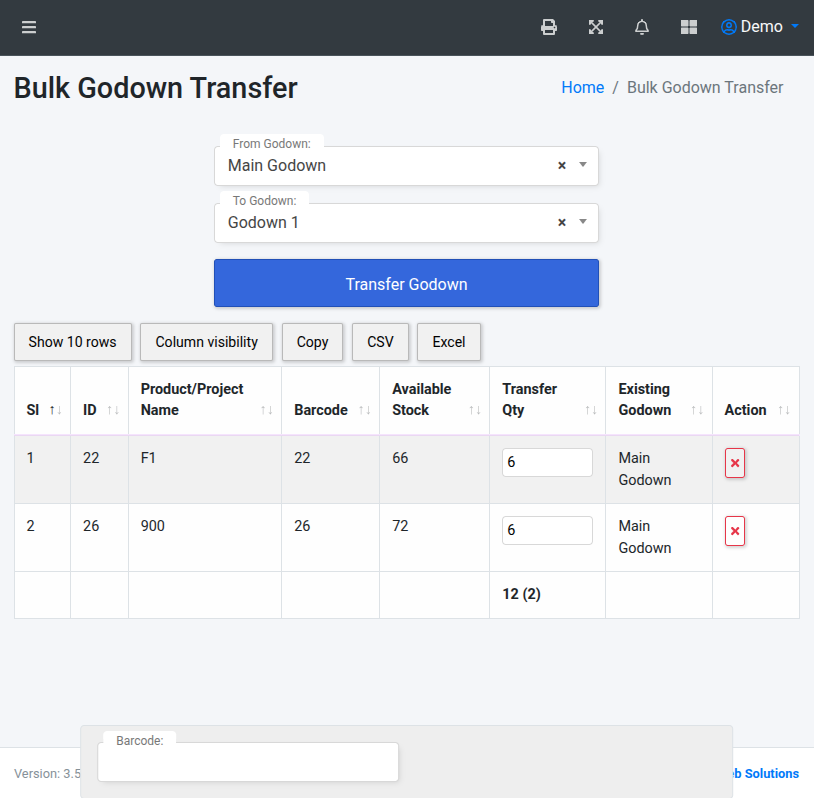
When preparing a transfer at the sending location, the supervisor doesn’t just count items. They scan each item’s barcode one by one.
The system validates each scan:
- Is this item actually in stock at this godown?
- Has it already been added to another pending transfer?
- Is the barcode valid and recognized?
Only items that pass validation get added to the transfer. No guessing. No manual entry. No “let’s just estimate the count.”
Once all items are scanned, the system generates a transfer receipt with complete details:
- Exact list of items with individual barcodes
- Product names, variants, and quantities
- Timestamp of when transfer was initiated
- Who created the transfer
This receipt becomes the source of truth. What’s on this list is what was officially sent.
Step 2: Receiving with Strict Validation
Here’s where the magic happens.
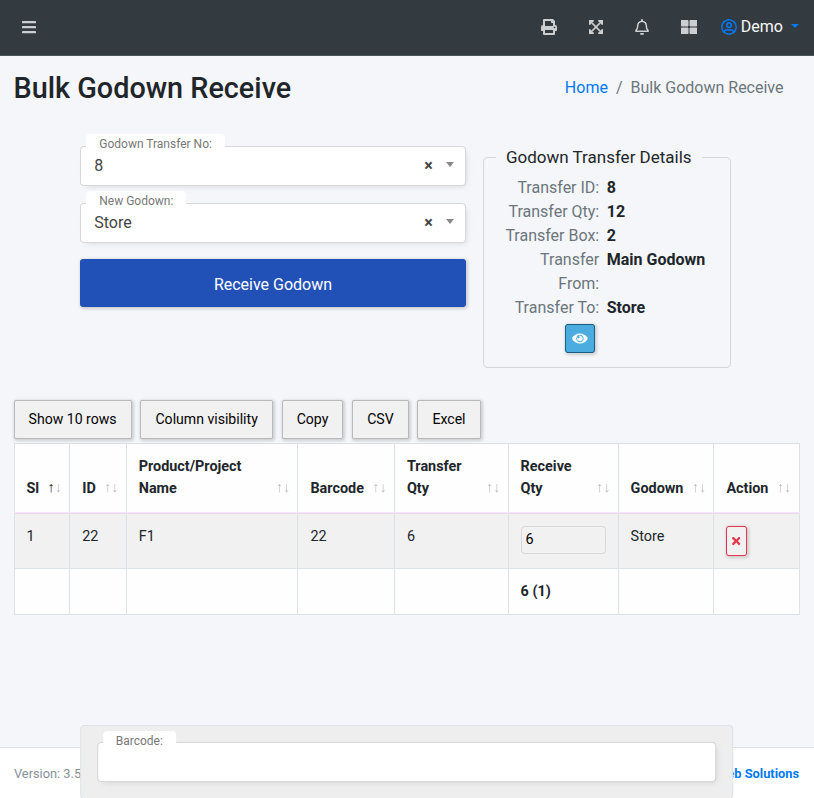
At the receiving godown, the staff doesn’t just accept the delivery and update inventory. They must scan every incoming item.
For each barcode scanned, the system asks:
- Was this item part of a pending transfer to this location?
- Is it from the transfer you’re currently receiving?
This validation catches two critical issues.
Wrong Transfer Detection: Suppose Godown A sends two transfers to Godown B simultaneously - Transfer #101 with 20 items and Transfer #102 with 30 items. If someone at Godown B is receiving Transfer #101 and accidentally scans an item from Transfer #102, the system rejects it immediately.
“This item belongs to Transfer #102, not Transfer #101. Scan only items from the current transfer.”
This prevents mixing up deliveries and ensures every item lands in the correct transfer record.
Unauthorized Item Detection: If someone tries to receive an item that was never part of any transfer - maybe a stolen item someone’s trying to sneak into inventory - the system flags it. “This barcode was not sent in any pending transfer. Cannot accept.”
The Problem That Persisted
This initial system reduced issues significantly. But the client came back with another concern.
“It’s better now, but there’s still a problem. Sometimes transfers just sit as ‘partially received’ for weeks. Nobody follows up. Items go missing and we discover it too late.”
He was right. Here’s what was happening:
A transfer of 20 items gets initiated. At the receiving end, the person scans 15 items and gets distracted. They never complete the receiving process. The transfer stays in a limbo state - not fully sent, not fully received.
Those 5 unscanned items? Maybe they’re sitting in a corner. Maybe they got mixed with other stock. Maybe someone took them. Without urgency, nobody investigates.
We needed a forcing function. Something that wouldn’t let people ignore incomplete transfers.
The Strict Validation That Changed Everything
So we added what I call “forced completion with accountability.”
Here’s how the enhanced system works:
Complete Scan Requirement: A transfer is only marked as “Received” when 100% of the items from the transfer receipt have been scanned at the receiving location. Until then, it remains “Pending.”
Pending Transfer Visibility: All pending transfers show up on a dashboard. Management can see at a glance:
- Transfer #101: Sent 3 days ago, 20 items, 0 received
- Transfer #102: Sent yesterday, 15 items, 15 received ✓
- Transfer #103: Sent today, 25 items, 20 received (5 pending)
Automatic Escalation: If a transfer remains incomplete beyond a threshold (say 48 hours), the system alerts supervisors and management. “Transfer #101 has been pending for 3 days. Only 15 of 20 items received.”
Resolution Required: The pending transfer cannot be closed until either:
- All items are scanned and received, or
- Management acknowledges the discrepancy and logs a reason
This creates accountability at every step:
- The sender knows their transfer is being tracked
- The receiver knows they must scan everything
- The transporter knows missing items will be noticed immediately
- Management has real-time visibility into the pipeline
The Beautiful Validation System
What makes this system “beautiful” - a word the client actually used - is how intuitive the feedback is.
When the receiving person scans a barcode, they get immediate visual and audio feedback:
Green flash + success sound: Item accepted. Part of this transfer, now marked as received.
Orange flash + warning sound: Item belongs to a different transfer. Separate it and scan items from the correct batch.
Red flash + error sound: Item not part of any pending transfer. Set aside for investigation.
No training required. Within minutes, even new staff understand the system. Scan, wait for green, proceed. If it’s not green, stop and figure out why.
The dashboard shows real-time progress:
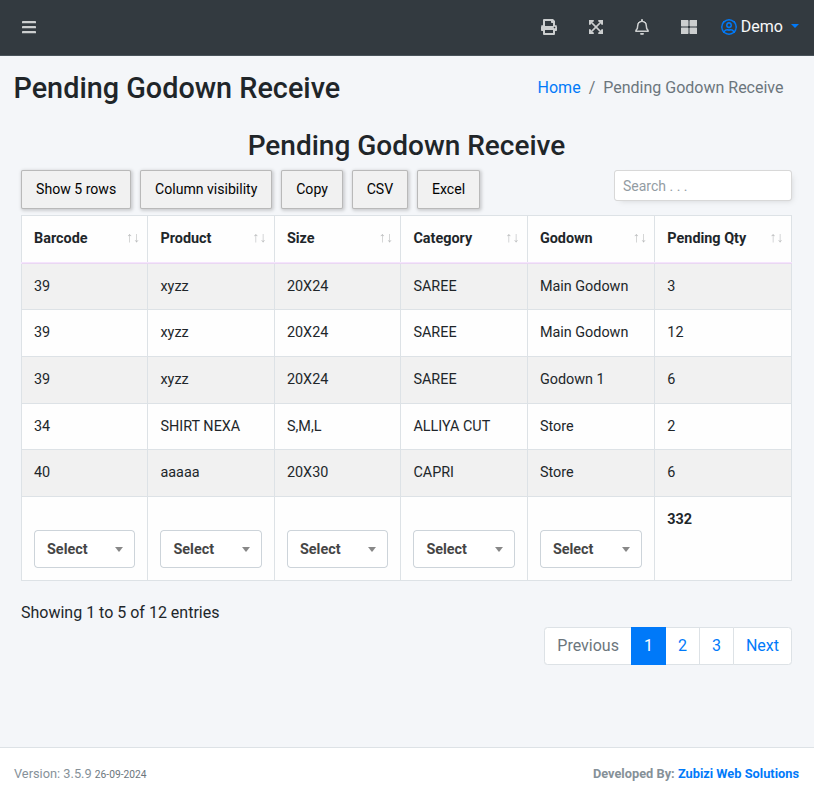
Staff can see exactly which barcodes are still missing. No more counting and recounting. Just find those specific items.
The Results: What Changed After Implementation
Let me share what happened after we deployed this system for the client.
Before the system:
- 3-5% product loss during transfers per month
- No visibility into where losses occurred
- Disputes between godowns about what was sent vs. received
- Monthly reconciliation revealed major discrepancies
After the first month:
- Product loss dropped to under 0.5%
- Every discrepancy was traceable to a specific transfer and timestamp
- Disputes between godowns eliminated - the system was the truth
- Weekly dashboards showed transfer health in real-time
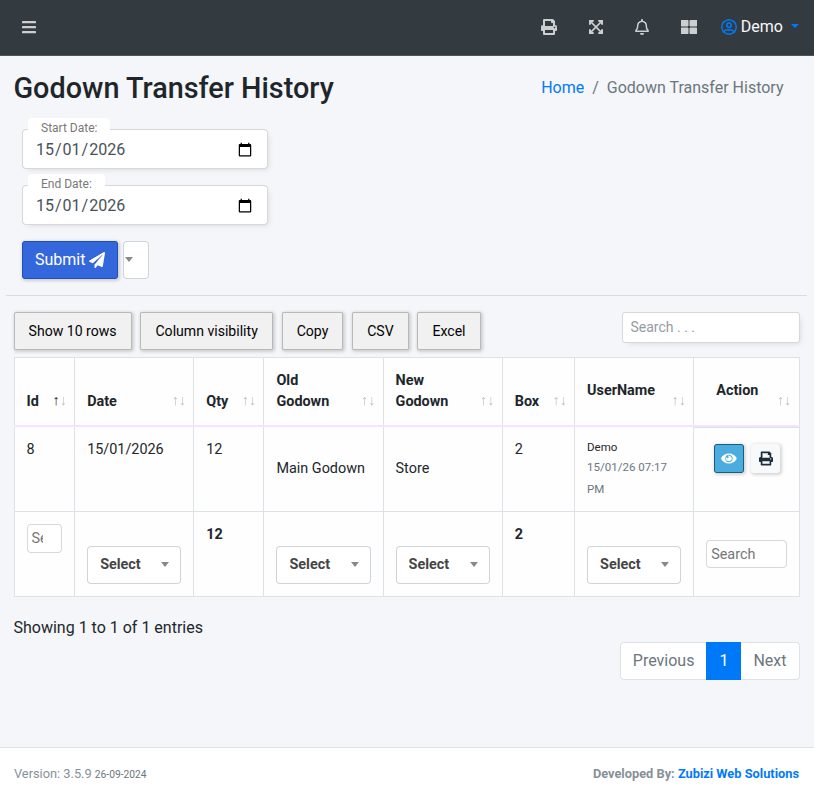
After three months:
- Zero unexplained losses in 2 consecutive months
- Staff became more careful knowing every item was tracked
- The client identified two employees who were skimming items - the data was undeniable
- Transfers that used to take 2 days to reconcile now resolved in real-time
The financial impact was substantial. The client estimated annual savings of ₹8-10 lakhs from prevented losses alone. That’s not counting the reduced time spent on manual reconciliation, dispute resolution, and inventory audits.
Why This Matters for Multi-Location Businesses
If you run a business with multiple godowns, warehouses, or retail locations, product movement is your vulnerability point.
Every time goods change hands - from warehouse to showroom, from one factory to another, from distribution center to branch - there’s an opportunity for things to go wrong.
For garment manufacturers: Raw materials move to cutting, cutting to stitching, stitching to packaging, packaging to dispatch. Each handoff is a risk.
For distributors: Stock moves from central warehouse to regional centers to dealers. The longer the chain, the more chances for leakage.
For retail chains: Inter-store transfers to balance inventory create constant product movement. Without tracking, your “in-transit” stock is a black box.
A strict godown transfer system like the one we built doesn’t just reduce theft. It creates accountability throughout your supply chain. When people know every item is tracked, behavior changes. When discrepancies are immediately visible, problems get solved before they compound.
Building This Into Your Operations
If you’re dealing with transfer losses and want to implement something similar, here’s what you need:
Item-Level Barcoding: Every product needs a scannable barcode. Not just product SKUs, but individual item barcodes if possible. This is the foundation of strict tracking.
Integrated Transfer Module: Your inventory management system needs a transfer function that validates items at both ends - not just updates quantities after the fact.
Real-Time Sync: Both godowns need to be on the same system with real-time data sync. If Godown A marks items as transferred, Godown B should see them as pending receipt immediately.
Forced Completion: The system must not allow partial transfers to be forgotten. Pending transfers need alerts, escalations, and accountability.
Audit Trail: Every action - scan, transfer initiation, receipt, rejection - should be logged with timestamps and user IDs. This is your proof when investigating issues.
At Zubizi, we’ve built these capabilities into our godown transfer and stock management tools. Businesses with multiple locations use it to ensure nothing slips through the cracks during product movement.
A System That Pays for Itself
What started as a frustrated phone call turned into one of the most impactful features we’ve built.
The client who first reported the problem now runs transfers between four godowns with complete confidence. His operations manager can track every item from source to destination. Missing products are no longer a mystery - they’re either at their destination or flagged for investigation.
That’s the power of strict validation. Not just tracking what you shipped, but verifying what arrived. Not just trusting people to count correctly, but giving them a system that makes mistakes visible immediately.
If you’re losing products in transit and can’t figure out why, the answer isn’t more supervision or stricter policies. It’s a system that makes every item accountable.
Ready to Stop the Bleeding?
Product loss during transfers isn’t inevitable. It’s a solvable problem with the right systems in place.
If you manage multiple godowns and want to explore how barcode-based transfer validation can work for your business, reach out to us. Or check out how Zubizi’s stock management tools handle multi-location inventory.
Your products deserve to arrive exactly where they’re meant to go. Every single one of them.