10 Critical E-Invoicing Updates Every Indian Business Must Know (2025-2026)
Stay compliant with the latest 2025-2026 e-invoicing rules in India. Discover the new ₹10 Cr limit, MFA mandates, and how to avoid ITC penalties.

The New Reality of GST Compliance
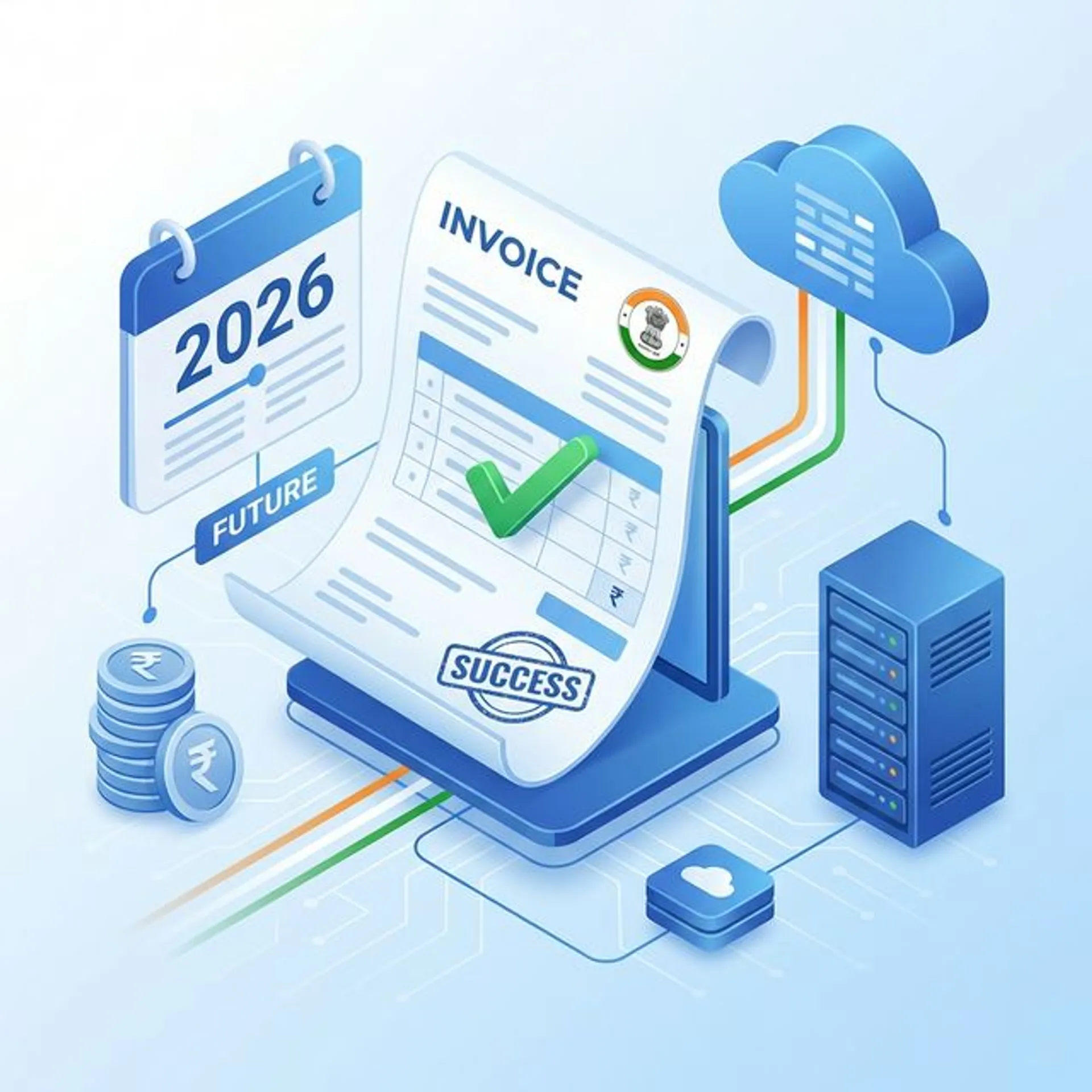
If you are running a business in India today, you know that keeping up with GST changes is a full-time job. The government is tightening regulations faster than ever, and 2025 has brought some of the most significant updates yet.
New turnover limits. Mandatory Multi-Factor Authentication (MFA). Strict 30-day reporting windows. If you miss a deadline or ignore a notification, you face penalties, blocked e-way bills, or worse - frozen Input Tax Credit (ITC).
At Zubizi, we help thousands of Indian businesses navigate these changes daily. We know the confusion and the panic that comes with every new circular. That is why we have compiled this list.
Here are the 10 critical e-invoicing updates you need to know for 2025 and 2026 to keep your business safe and compliant.
1. The New 30-Day Reporting Rule (April 1, 2025)
This is the biggest immediate change.
What Changed: Previously, there was no strict time limit for uploading old invoices to the IRP (Invoice Registration Portal). You could technically upload an invoice from two months ago today.
The New Rule: Starting April 1, 2025, businesses with a turnover of ₹10 Crore or more must report e-invoices within 30 days of the invoice date.
Why It Matters: If your invoice is dated January 1st, you cannot generate an IRN (Invoice Reference Number) for it after January 31st. The system will block it. This means no valid e-invoice, which equals no valid ITC for your buyer.
2. Lowered B2B Threshold: Are You Next?
The net is widening.
What Changed: E-invoicing started with huge corporations (₹500 Cr turnover). Over the years, this limit has dropped to ₹100 Cr, ₹50 Cr, ₹20 Cr, ₹10 Cr, and finally ₹5 Cr.
The Forecast: While the limit currently stands at ₹5 Crore, the industry anticipates the next phase will eventually cover businesses with ₹3 Crore turnover.
Impact: If your turnover is close to ₹3 Cr, it is wise to stay prepared. When the government announces the next phase, the implementation window may be short.
3. Mandatory Two-Factor Authentication (MFA)
Security is no longer optional.
What Changed: To stop fraudulent logins, the National Informatics Centre (NIC) has made 2-factor authentication mandatory.
The Deadline: As of April 1, 2025, all taxpayers logging into the e-invoice portal must use MFA. This usually means an OTP on your registered mobile or email every time you log in.
Zubizi Solution: Our ERP handles the secure handshake for you, so you don’t have to manually enter OTPs for every single invoice generation.
4. No More “Backdated” E-Way Bills for B2B
This closes a major loophole.
What Changed: You can no longer generate an e-way bill for B2B transactions without an IRN (Invoice Reference Number).
The Impact: If you are moving goods worth more than ₹50,000, you cannot just make a “challan” and ship it. You must generate the e-invoice first. The e-way bill system will fetch the details directly from the e-invoice. No e-invoice? No e-way bill. No movement of goods.
5. B2C E-Invoicing: Still a Topic of Debate?
There have been long-standing rumors about extending e-invoicing to B2C (Business to Consumer) transactions, but 2026 is here, and there is still no green light.
The Status: While the government has hinted at B2C pilots in the past, no official mandate has been released. The focus remains strictly on tightening B2B compliance and closing loopholes there.
What to Watch: For now, the only requirement for large B2C players (Turnover > ₹500 Cr) remains the Dynamic QR Code on invoices for digital payments. Full-fledged e-invoicing for B2C is not on the immediate horizon.
6. The “Blockage” of Input Tax Credit (ITC)
This is where it hurts your cash flow.
The Risk: If your supplier is required to e-invoice but sends you a normal bill, that bill is valid for accounting but invalid for GST.
Recent Update: The GST portal now automatically flags ITC claims from suppliers who are e-invoice compliant but failed to upload the specific invoice IRN. You will see these flagged in your GSTR-2B.
Action: Don’t pay the GST portion to your supplier until you see the valid IRN on the invoice.
7. Real-Time Data Validation
The IRP is getting smarter.
What Changed: The portal now validates HSN codes and tax rates in real-time.
The Error: If you try to upload an invoice for a “Shirt” (Apparel) with an 18% tax rate but the HSN code corresponds to a 5% category, the IRP will reject it instantly.
Solution: You need an ERP like Zubizi ERP that has a master database of correct HSN codes to prevent these rejections before you even click “Upload.”
8. The Shift to “Smart Forms” (2026 Outlook)
The future is pre-filled.
The Vision: With the proposed Income Tax Act updates, the government aims to pre-fill your annual returns using the data from your e-invoices.
What It Means: Your sales data in your GST return, your Income Tax return, and your e-invoice portal must match 100%. Any discrepancy will trigger an automated notice. Digital consistency is now mandatory.
9. Why Excel/Manual Uploads Are Now Dangerous
Many small businesses entered the particular e-invoicing regime using the “Offline Utility” - basically an Excel upload tool.
The Problem:
- Too Slow: With the 30-day limit, bulk uploading once a month is risky.
- No Checks: Excel won’t tell you if an HSN code is wrong until the portal rejects the whole batch.
- MFA Hurdles: Manual logins now require OTPs every time.
Verdict: Manual tools are becoming obsolete. API-based integration is the only sustainable way forward.
10. The Role of Automated ERP
You cannot fight technology with manual work.
The Solution: The only way to stay compliant without hiring a team of accountants is to use software that automates compliance.
How Zubizi Helps:
- Auto-Validation: We check HSN codes and tax rates before sending data.
- One-Click Generation: Create Invoice -> Click “Generate IRN” -> Done.
- Safety Net: We alert you if you are approaching the 30-day limit.
Conclusion
The message from the government is clear: Digitise or face penalties. The era of “creative accounting” and manual adjustments is ending.
The shift to strict e-invoicing might feel burdensome, but it also levels the playing field. It ensures that honest businesses aren’t undercut by those evading tax.
Don’t wait for a notice to upgrade your systems. 2026 is the year of 100% digital compliance.