The Beginner’s Guide to Barcodes: What They Are & Why Your Business Needs Them
Everything you need to know about barcodes for your Indian business. Learn what they are, how they work, and why retailers and manufacturers rely on them.

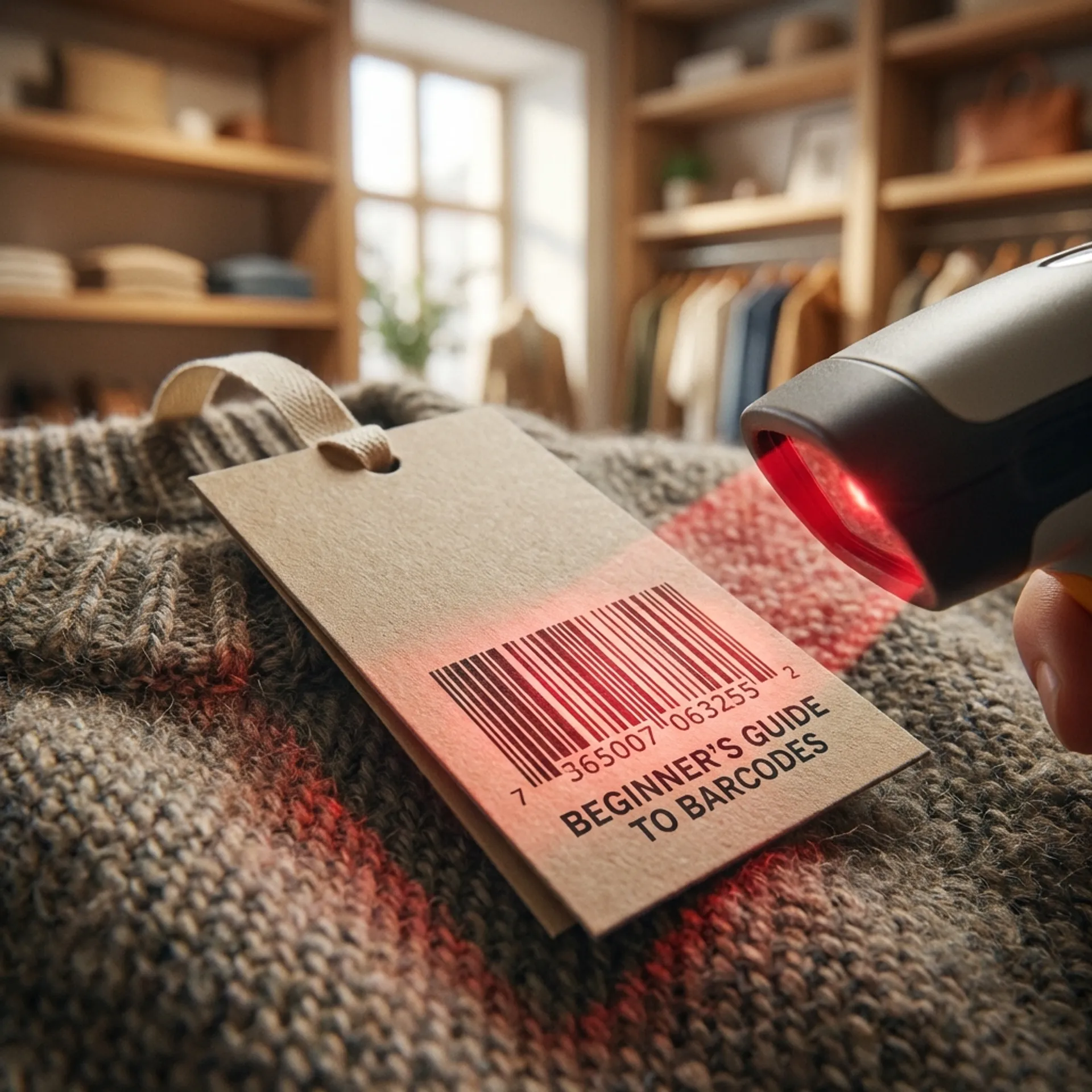
If you walk into any supermarket in Mumbai or a local kirana shop that’s modernized, you’ll hear that familiar beep-beep sound at the checkout. That sound is the heartbeat of modern retail.
But for many new business owners - especially if you’re just starting your tailored garment factory or opening your first retail outlet - barcodes can feel like a “big company” thing. You might think, “I’m just a small manufacturer, do I really need this complex tech?”
I’ve been there. I grew up in a garment manufacturing hub, and I remember when we tracked everything with pen and paper. It was chaos. Inventory went missing, orders got mixed up, and we lost money.
The truth is, you don’t need to be a tech wizard to use barcodes. They are surprisingly simple, creating a “license plate” for your products that computers can read.
In this beginner’s guide, I’ll walk you through exactly what barcodes are, how they work, and why your business - whether you are a retailer or a manufacturer - absolutely needs them to scale.
What is a Barcode?
At its core, a barcode is just a method of representing data in a visual, machine-readable form.
Think of it like a digital fingerprint or a license plate for a specific product.
Instead of writing “Men’s Cotton Shirt, Size M, Blue” on a tag and hoping your cashier reads it correctly, you put a small image of lines and spaces on the tag. A scanner reads those lines and instantly tells the computer exactly what that item is.
It creates a bridge between your physical product and your computer software (like your billing or ERP system).
How Do Barcodes Work?
You might wonder, how does a bunch of black lines translate into product information?
It’s actually quite fascinating but simple logic.
- The Pattern: The black bars and white spaces represent numbers and letters in a language (binary code) that computers understand.
- Black bars absorb light.
- White spaces reflect light.
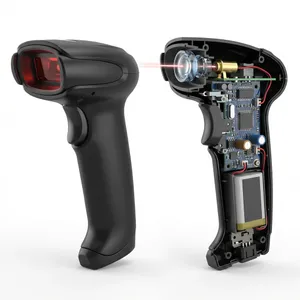
- The Scanner: When you point a red laser scanner at a barcode, it shoots light onto the code.
- The Translation: A sensor inside the scanner measures the reflected light. It turns that pattern of light and dark into electrical signals, which then become the number (e.g.,
8901234567890) that appears on your screen. - The Database: Your computer takes that number, looks it up in your database, and pulls up “Men’s Cotton Shirt, Blue, ₹1,200”.
All of this happens in a fraction of a second.
Why Are Barcodes Important?
You might be thinking, “I can just type the product name or price manually.”
You can, but here is why you shouldn’t.
1. Speed
Imagine a customer buying 15 items.
- Manual Entry: You have to look for the price tag, type “500”, find the next one, type “250”… This takes 2-3 minutes.
- Scanning: Beep. Beep. Beep. Done in 20 seconds.
Faster checkouts mean happier customers and shorter queues.
2. Accuracy (Eliminating “Human Error”)
In my experience working with retailers, typing errors are the biggest source of inventory mismatch. A cashier might type ₹100 instead of ₹1000 by mistake. Or they might bill a “Red Shirt” as a “Blue Shirt.”
A barcode scanner never gets tired and never creates typos. It is 99.99% accurate.
3. Inventory Control
This is crucial for manufacturers. If you have 500 sarees in your warehouse, counting them manually is a nightmare. With barcodes, and a solid inventory management system, you can scan items as they leave for delivery. You instantly know:
- What you made.
- What you sold.
- What is left in stock.
Who Needs Barcodes?
1. Retailers
If you run a supermarket, garment shop, or hardware store, you need barcodes for:
- Billing: To print invoices quickly (especially with GST compliance).
- Stock Taking: To audit your shop floor without closing down for 3 days.
2. Manufacturers
For factory owners, barcodes track the production process. You can label raw materials when they arrive and label finished goods when they pack.
- Traceability: If a batch has a defect, you know exactly when it was made and where it went.
- Standardization: If you are in the garment sector, following barcode standards for garments helps in professional packaging.
3. Brand Owners (D2C)
If you want to sell on platforms like Amazon India, Flipkart, or JioMart, you generally cannot list your products without a standardized barcode (like a GTIN or EAN). It is mandatory for listing unique products.
Types of Barcodes You Should Know
You don’t need to know all of them, but these two are the most common in India.
1. 1D Barcodes (Linear)
These are the standard “picket fence” lines you see on everything from biscuits to shampoo bottles.
- Use Case: Retail billing, general inventory.
- Common Format: EAN-13 (used globally for retail products).
2. 2D Barcodes
These look like squares or dot patterns. The most famous one is the QR Code.
- Use Case: Payments (UPI), marketing (scan to visit website), or storing a lot of data like a website URL or a batch number.
- Advantage: They can hold much more information than 1D barcodes and can be scanned even if slightly damaged.
Common Questions (FAQs)
Here are the questions I get asked most often by business owners in India.
Do I need a barcode to sell on Amazon?
Yes. For most categories, Amazon requires a unique product identifier, usually a GTIN (Global Trade Item Number). This serves as a universal ID for your product. We have a detailed guide on whether GS1 barcodes are mandatory if you want to dive deeper.
Can I create my own barcodes?
Yes and No.
- Internal Use: If you only sell products inside your own shop (like a specific sweet you make), you can print your own “local” barcodes using your billing software (like Zubizi). This is free.
- External Use: If you want to sell your product in other shops or online, you cannot just make up a number. You must buy an official barcode from GS1 India to ensure your code is unique worldwide.
What is the difference between EAN and UPC?
- UPC (Universal Product Code): 12 digits. Primarily used in the USA and Canada.
- EAN (European Article Number): 13 digits. The standard used in India and the rest of the world. If you are in India, you will mostly deal with EAN-13.
How do I get a barcode for my products?
If you are a manufacturer wanting to sell globally or on large marketplaces:
- Register with GS1 India.
- Pay the fee based on your turnover.
- They will assign you a prefix and you can generate unique numbers for your products.
The Future of Barcodes (2026 & Beyond)
You might have heard buzz about “2D Barcodes” or “GS1 Sunrise 2027.” Here is what that means for you.
By the end of 2027, the global retail industry is moving towards 2D barcodes (like QR codes with data) at the Point of Sale. This is a massive shift happening right now in 2026.
Why the shift?
Old “line” barcodes only hold a number. The new 2D barcodes can hold:
- Expiry Dates: Automatic alerts at checkout if an item is expired.
- Batch Numbers: Instant recall management.
- Web Links: Customers can scan to see recipes or sustainability info.
How to Catch Up?
Don’t worry, your old barcodes won’t stop working overnight. But if you are buying software today, you should future-proof your business.
Ensure your billing software can handle both 1D and 2D barcodes. Zubizi is already built with this future in mind. Our tools allow you to generate and scan standard EAN codes today and are ready for the 2D shift tomorrow, so you don’t have to change your system in two years.
Conclusion
Barcodes might seem like a small detail, but they are the foundation of a professional, scalable business. They save you time, stop money from leaking through errors, and open doors to online sales.
We learned this the hard way at Zubizi - systems that rely on manual entry eventually break. Systems that rely on automation scale.
If you are running a retail store or a small factory, start small. You don’t need expensive equipment. A simple barcode printer and a ₹2,000 scanner connected to your billing software can change your life.
Ready to organize your inventory? Check out our GST Billing & Invoicing Software which has built-in barcode generation support to get you started today.